

















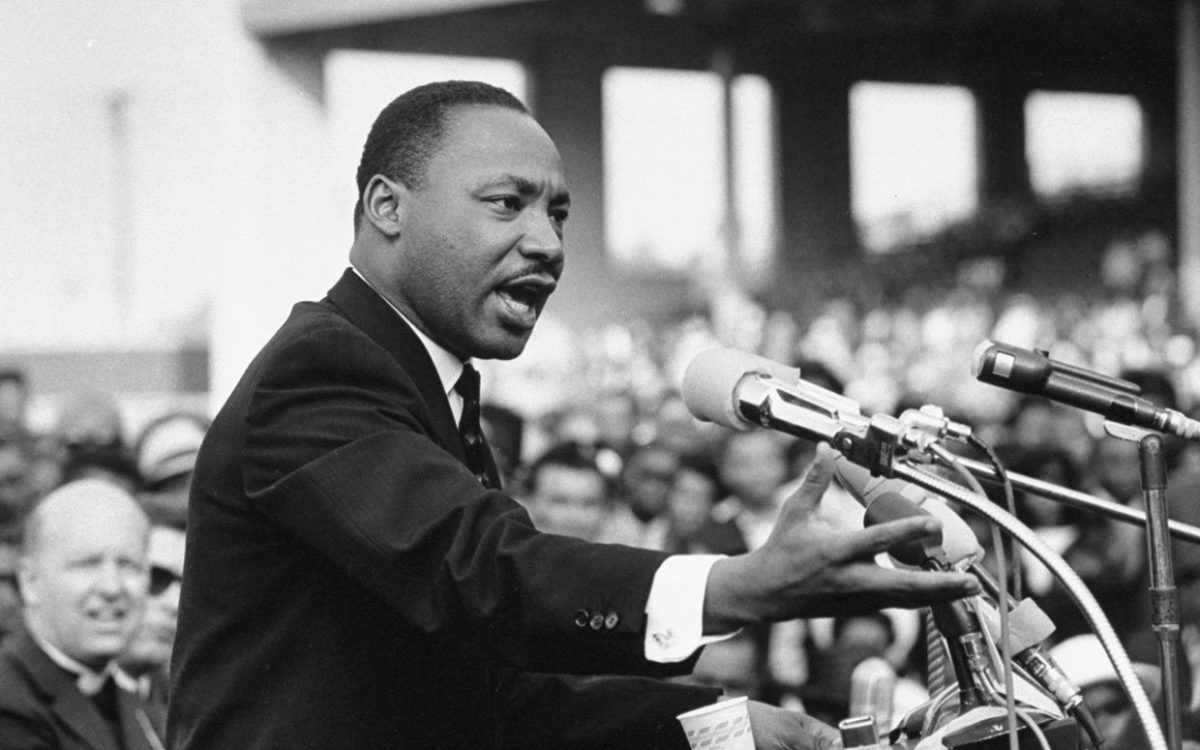





 Dr. Martin Luther King Jr. was a leader, a pastor, and a person who changed the course of American history. He was a civil rights activist who led the American civil rights movement in the mid-1950s. He inspired people by advocating nonviolent resistance and delivering powerful speeches that called for equality for all.
Dr. King moved to Montgomery, Alabama, where Rosa Parks made history when she refused to give up her seat on a bus. In 1955, Montgomery’s Black community staged a bus boycott that lasted for over a year. Dr. King played a crucial leadership role in organizing the protest. His arrest brought him onto the national stage as a key figure in the civil rights movement. Dr. King also founded the SCLC, which stands for the Southern Christian Leadership Conference, to protest Jim Crow laws.
The SCLC was inspired by Gandhi, who was a model of nonviolent resistance. King believed that peaceful protest would gain sympathetic media coverage. King was right, as the protests often drew national attention when white officials responded violently, creating outrage across the country. Ultimately, the civil rights movement achieved major victories with the passage of the Civil Rights Act in 1964 and the Voting Rights Act in 1965.
Dr. King was also involved in a sit-in protest during the 1960 presidential election between Richard Nixon and John F. Kennedy, which helped pressure Kennedy to support King’s release from jail. In 1963, King and the SCLC worked with the NAACP and other civil rights activists to organize the March on Washington for Jobs and Freedom. About 250,000 people gathered in the nation’s capital to rally for civil and economic rights for Black Americans. It was there that King delivered his famous “I Have a Dream” speech, where he said, “I look to a day when people will not be judged by the color of their skin, but by the content of their character.”
On April 4, Dr. King was assassinated in his Memphis hotel by James Earl Ray. President Johnson called for a National Day of Mourning on April 7. Congress later cemented King’s legacy as an American icon by declaring the third Monday of every January Martin Luther King Jr. Day.